There is a certain magic in being invited behind the scenes of a fashion brand. Most of us only see the finished product—a jacket in a store window, a sweater folded neatly online, a pair of trousers photographed in perfect light. But when you step into the studio, where sketches curl at the edges of a table and fabric swatches spill like autumn leaves across the floor, you realize that design is less about commerce and more about devotion. That was my impression the first time I sat quietly in the workspace of Alcott’s designers, watching them bring ideas to life.
The atmosphere was anything but sterile. Instead of the sleek silence you might expect from a design office, there was a hum of activity that felt almost musical. One designer bent over a sketchpad, the lines of a jacket evolving stroke by stroke; another stood with scissors, testing how a piece of wool might fall into shape when cut just so. There were racks lined with samples that had never seen daylight—early prototypes, experiments that may never be produced, but that carried within them the spirit of exploration. It was here, among half-finished thoughts made tangible, that I began to understand what Alcott means when it talks about authenticity.
I noticed how often the team returned to questions of wearability. Fashion can sometimes drift into the purely aesthetic, designed more for a runway than for a person’s actual life. But at this table, the discussion always circled back to the human body—how the shoulder seam might feel under a backpack strap, how a pocket could be deep enough to hold a phone without ruining the line of a silhouette. It was a reminder that clothes aren’t abstract concepts; they are companions to everyday rituals, from commuting to late-night walks home.
One of the designers showed me an unfinished coat, pinned and stitched in rough outline. It wasn’t meant for me to admire, but for them to analyze—how the fabric responded to movement, where it resisted, how it softened under touch. They explained that many of these pieces never make it into stores. Instead, they are like conversations between the team and the materials, a way of listening to what fabric can do before deciding what it should become. That patience struck me deeply. In an industry often pressured by speed, Alcott chooses to let design breathe.
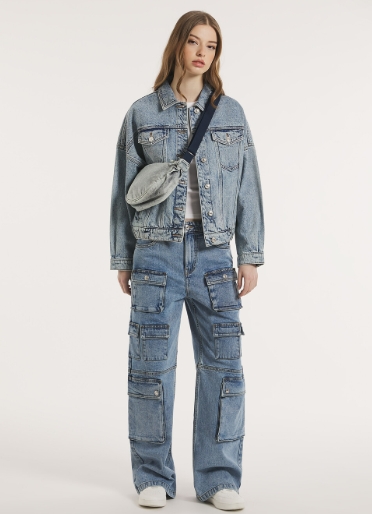
The cultural heritage of the brand also lingers in every detail. Alcott grew from a European sensibility where practicality and expression meet. This duality shows up in their choices: earthy palettes that echo city streets after rain, cuts that nod to tradition but still fit modern rhythms of life. Standing in that studio, I could see how this philosophy was not just a marketing line but something embodied in the hands of people sewing, sketching, and revising late into the evening.
It is easy to underestimate a T-shirt until you watch someone agonize over the slope of its neckline or the stretch of its cotton. I watched one designer tug at a fabric sample, frown, then scribble something in the margins of their notes. That small gesture said more about the brand’s commitment than any press release could. The unseen labor behind every garment is what allows a customer to pull it on in the morning without a second thought, trusting that it will fit both body and mood.
For those who want to glimpse this spirit beyond the studio walls, the best way is to explore alcott clothing. What you see there are the polished results, but behind each piece lies the same process I witnessed: long hours of deliberation, experiments that never made it, and a refusal to settle for less than both comfort and style.
When I left the workshop that evening, the tables were still cluttered with swatches, sketches, and prototypes. Nothing looked finished, yet everything felt alive. And I realized that this unfinishedness is part of what makes Alcott resonate—each garment is not just an object but a chapter in an ongoing dialogue between designers, materials, and the lives we lead once the clothes leave their hands.